
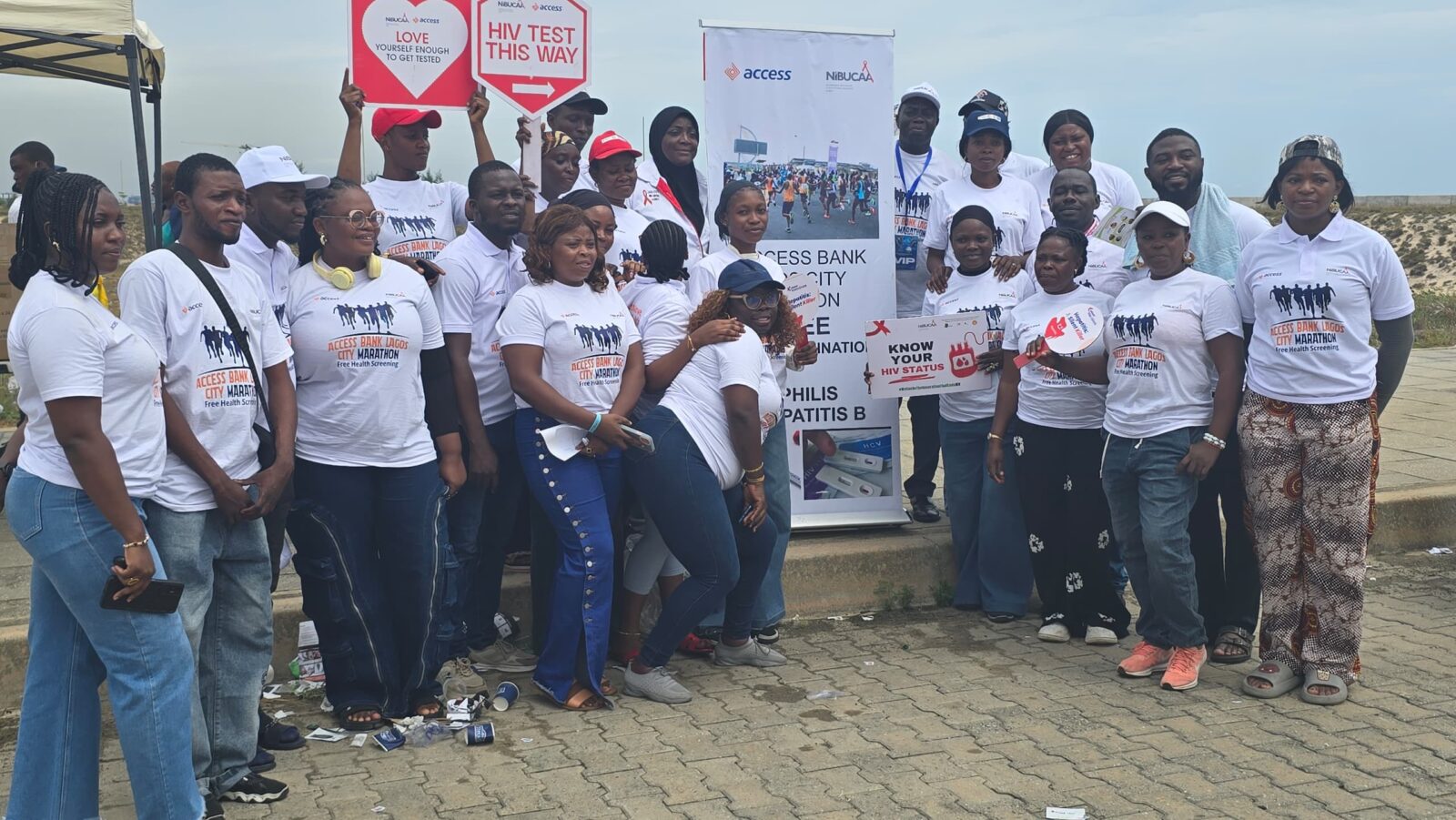
The Nigeria Business Coalition Against AIDS (NIBUCAA) offered free health screening services, including HIV testing, hepatitis B screening, vaccination, and blood sugar checks, to thousands of participants during the Access Bank Lagos City Marathon in Lagos.
The intervention formed part of the coalition’s annual public-health outreach aimed at promoting early detection, prevention, and access to care for communicable diseases in Nigeria.
Speaking at the marathon venue, NIBUCAA representative Opeyemi Yekini said the initiative aligns with global and national health priorities to end HIV, hepatitis, and other communicable diseases by 2030 under the Sustainable Development Goals (SDGs).
According to him, the coalition established in February 2003 through a presidential directive that brings together leading private-sector organizations to support national responses to HIV and other public-health challenges.
He explained that this year’s intervention focused on the “triple elimination” strategy, which includes HIV testing services, syphilis testing, and hepatitis B testing and vaccination.
Yekini disclosed that sensitization and testing activities began before the marathon and continued on race day, reaching more than 23,000 people through awareness campaigns and direct engagement.
He emphasized that prevention remains more cost-effective than treatment, noting that Nigeria currently has about 1.9 million people living with HIV.
“Early detection and prompt linkage to care are critical,” he said, adding that confidentiality remains a top priority in HIV testing services, as results are only disclosed with the individual’s consent.
Yekini also stressed the importance of eliminating stigma and discrimination against people living with HIV, noting that individuals who adhere to treatment can live healthy and productive lives.
Another health expert at the event, Tobi Adebanjo, highlighted the importance of hepatitis B awareness, describing the disease as a “silent killer” that often shows no symptoms until serious liver damage occurs.
Adebanjo said participants received counseling, testing, and vaccination services during the outreach, adding that early diagnosis and prevention remain the most effective ways to control hepatitis B.
He explained that hepatitis B can be transmitted through infected blood, sexual contact, mother-to-child transmission, and the sharing of sharp objects, urging Nigerians to know their status and get vaccinated if they test negative.
The health expert also encouraged safer lifestyle choices, including reduced alcohol consumption, avoidance of smoking, and practicing safe sex, to protect liver health.
The coalition reiterated its commitment to working with stakeholders across Nigeria to expand access to health education, testing, and prevention services, particularly among young people and vulnerable populations.
NIBUCAA Provides Free HIV, Hepatitis B and Blood Sugar Screening at Lagos City Marathon
