
The International Coaching Federation (ICF) Nigeria Chapter has called for the adoption of coaching culture across public and private institutions as part of efforts to strengthen leadership, governance, productivity, and national development.
The call was made during the 2026 International Coaching Week Conference held in Lagos, where business leaders, policymakers, professionals, and development experts gathered to discuss the role of coaching in transforming leadership across Africa.
Speaking at the event, President of ICF Nigeria Chapter, Mr. Charles Okeibunor, described coaching as a strategic leadership tool capable of improving decision-making, problem-solving, and organizational effectiveness.
According to him, coaching has become increasingly relevant globally because it helps individuals and institutions unlock potential, improve strategic thinking, and enhance productivity.
“This conference is part of activities marking the International Coaching Week celebrated simultaneously across 140 countries,” he said. “The International Coaching Federation remains the global benchmark for coaching training and accreditation.”
Okeibunor stressed that coaching should move beyond theory into practical implementation within organizations and government institutions.
He urged employers and public institutions to integrate coaching into leadership development and staff capacity-building programmes.
“Every professional should have access to coaching as part of workplace development. Just as organizations budget for training, they should also budget for coaching,” he stated.
The ICF Nigeria President explained that the federation has introduced initiatives aimed at expanding access to professional coaching, including free coaching sessions and pro bono programmes targeted at professionals and young people.
According to him, the conference was intentionally opened to participants from different professions in order to deepen awareness about coaching and leadership transformation.
“We are opening coaching conversations to journalists, bankers, entrepreneurs, and professionals from all walks of life because coaching is relevant wherever decision-making and leadership are involved,” he added.
Former Minister of Industry, Trade and Investment, Dr. Okechukwu Enelamah, who delivered the keynote address, linked coaching directly to transformational leadership and national development.
Enelamah described leadership as influence rather than authority, noting that coaching enables leaders to listen, engage, and bring out the best in people.
“Coaching relies on listening to people and helping them reach their full potential. Leadership built on influence lasts longer than leadership based only on authority,” he said.
Reflecting on his experience in government, the former minister said coaching principles helped shape stakeholder engagement and policy implementation, especially during efforts to improve ease of doing business in Nigeria.
“We focused on listening to stakeholders, solving their problems, and creating an enabling environment for businesses and investors,” he noted.
Also speaking at the event, business executive and leadership expert, Mr. Michael Kpoki, said African institutions must move away from rigid command-and-control leadership structures toward more inclusive and inspirational leadership models.
According to him, innovation and economic growth can only thrive in environments where leaders empower people and encourage collaboration.
“We are now operating in a knowledge-based economy where leaders must unlock ideas, creativity, and innovation from within organizations,” he said.
Kpoki noted that many African institutions remain overly dependent on positional authority, warning that such leadership approaches limit productivity and institutional growth.
“We need a new leadership culture where people feel part of a shared vision rather than being controlled from the top,” he added.
Director of Marketing and Communications for ICF Nigeria Chapter, Mrs. Patrenia Onuoha, also emphasized the need for self-awareness, emotional intelligence, and authentic leadership within organizations.
She said institutions must first acknowledge existing leadership gaps before they can build cultures that encourage innovation, accountability, and collaboration.
According to her, command-style leadership is becoming outdated in a rapidly changing global environment where agility and creativity are increasingly important.
Onuoha also highlighted ICF Nigeria’s youth-focused initiatives, including mentorship and free coaching programmes designed to help young professionals develop leadership skills and career direction.
“We believe coaching can help young Nigerians discover their strengths, improve self-awareness, and compete effectively in the global economy,” she said.
The conference, themed “From Authority to Influence: Coaching as the New Currency for Leadership,” featured panel discussions, executive sessions, and leadership conversations focused on governance, organizational transformation, and human capital development.
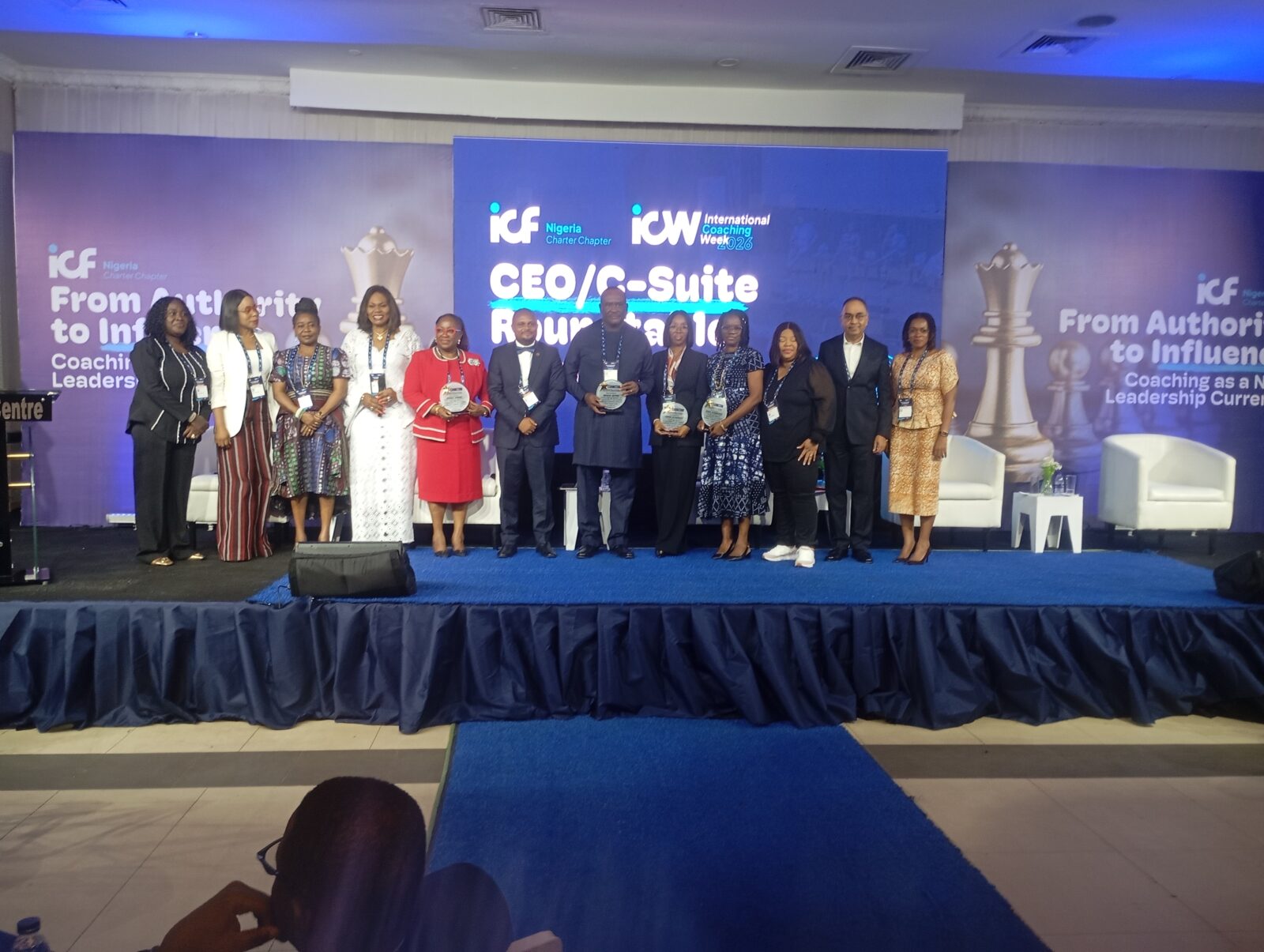
ICF Nigeria Pushes Coaching Culture as Tool for Leadership, Governance Reform
